 Reviews


 Proudly American


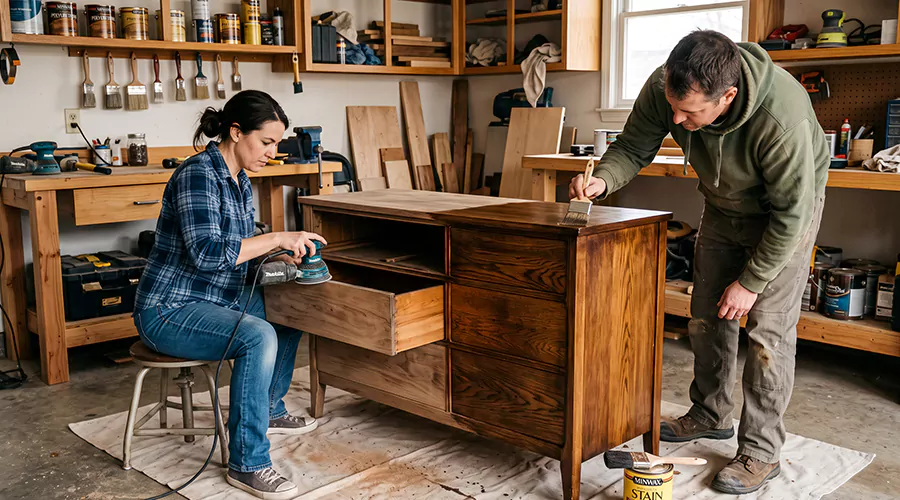
Old wood furniture can usually be refinished by cleaning the piece, repairing defects, removing the failed finish, sanding carefully, and applying a new protective coating. The best results come from identifying whether the furniture is solid wood or veneer before aggressive stripping or sanding begins.
Older furniture can have a thin veneer or an original finish that is worth preserving. Refinishing should therefore begin with the least aggressive method that solves the problem.
When Should Old Furniture Be Refinished?
Furniture should be refinished when the existing coating is badly worn but the wood underneath remains structurally sound. A dull surface alone may need cleaning or a finish refresh rather than complete stripping.
Refinishing is more appropriate when you see:
- Peeling finish
- Deep surface scratches
- Widespread discoloration
- Water rings that reached the finish
- Old failed varnish
- Uneven previous repairs
- Bare wood in worn areas
Refinishing wood furniture won't correct severe structural damage until loose joints or broken pieces have been repaired.
What Should You Check Before Starting?
The first water damage inspection should determine what the piece is made of and whether the existing finish should be removed.
Check:
- Whether surfaces are solid wood or veneer.
- Whether joints feel loose.
- Whether veneer edges are lifting.
- Whether the wood has water damage.
- Whether previous repairs are visible.
- Whether the piece is painted.
- Whether decorative inlays are present.
- Whether the furniture may have collectible value.
Older painted furniture can contain lead. Do not dry-sand unknown old paint until the coating has been properly evaluated.
Should You Clean Furniture Before Stripping It?
Yes. Cleaning can reveal that some dark areas are dirt or wax rather than finish failure. Starting with a dirty surface can also push grime into the wood during sanding. Use a cleaner suited to finished wood and work in a small area first. Let the piece dry before deciding whether stripping is actually needed. A surprisingly large number of old pieces need repair and finish renewal rather than complete removal of every existing coating.
How Do You Remove an Old Finish?
Old finish can be removed mechanically or with a compatible stripping product. The method should match the type of finish and construction of the furniture.
A basic process is:
- Protect the work area.
- Remove hardware where practical.
- Test the removal method in a hidden area.
- Work on one section at a time.
- Remove softened finish carefully.
- Let the wood dry as directed.
- Inspect the surface before sanding.
Do not gouge the wood with aggressive scraping.
Chemical stripping can be useful on detailed furniture because sanding alone can flatten carved edges.
How Should Old Furniture Be Sanded?
Sanding should smooth the wood rather than reshape it. Start with the finest abrasive that can correct the remaining defects.
Work gradually:
- Sand solid wood with the grain.
- Use light pressure on veneer.
- Move to finer grits gradually.
- Avoid rounding crisp edges.
- Remove dust before inspecting.
- Stop once the surface is uniformly prepared.
Thin veneer can be sanded through quickly. Once the veneer layer is gone, normal refinishing can't restore it without replacing that section.
How Do You Repair Scratches and Small Defects?
Repairs should be completed before the final finish is applied. Small dents or scratches may improve during surface preparation while deeper damage can require filling.
| Damage | Possible Approach |
|---|---|
| Fine scratches | Light sanding |
| Small dents | Evaluate before filling |
| Loose joint | Reglue before finishing |
| Missing wood | Patch or fill |
| Loose veneer | Reattach carefully |
| Dark water stain | Treat before final finish |
| Deep split | Structural repair |
Wood restoration should preserve stable original material rather than covering structural defects with filler.
Can Water-Damaged Furniture Be Refinished?
Yes, when the wood has dried and remains structurally stable. Water can cause swelling or raised grain. Veneer can also loosen when moisture weakens old adhesive. Repair water damaged wood furniture only after the moisture condition has stabilized. Wait before sanding warped wood. A panel can change shape while it dries, so sanding too early can leave it uneven later. Soft or decayed wood is a different problem and may require replacement of the damaged section.
Should You Stain Old Wood Furniture?
Stain is optional. It changes the wood color but doesn't act as the main protective finish. A test area matters because old wood can absorb stain unevenly. Repaired sections or exposed end grain may become darker than surrounding areas. If you like the natural color after sanding, a clear finish may provide a more predictable appearance.
What Finish Should You Apply?
The finish should suit how the furniture will be used. A dining table needs more wear resistance than a decorative cabinet.
Common finish categories include:
- Oil-based finishes
- Water-based clear coatings
- Traditional varnish systems
- Wax used over suitable existing finishes
Follow the product's drying and recoating instructions. More finish isn't always better because overly thick layers can cure poorly.
What Mistakes Can Ruin a Refinishing Project?
Most permanent mistakes happen during removal rather than the final coating.
Avoid:
- Sanding through veneer.
- Stripping a valuable original finish without checking.
- Sanding unknown old paint.
- Applying finish over dust.
- Staining wood before it dries.
- Filling moving joints cosmetically.
- Applying thick coats.
- Skipping a hidden-area test.
Refinishing wood furniture should be slower around edges and decorative details than across broad solid-wood surfaces.
When Should You Call a Professional?
Professional assessment is appropriate when the piece is antique or contains complicated veneer work. Original finishes can also be part of a valuable item's history.
Consider professional help when:
- The furniture has significant monetary value.
- Veneer is lifting across large areas.
- Decorative inlays are loose.
- Structural joints have failed.
- A historic finish may be present.
- The wood is badly warped.
- Previous repairs are difficult to reverse.
How Can You Protect Refinished Furniture?
Allow the new coating to cure fully before heavy use.
Afterward:
- Use coasters under drinks.
- Wipe spills promptly.
- Keep furniture away from active leaks.
- Avoid harsh household cleaners.
- Use pads beneath decorative objects.
- Maintain moderate indoor humidity.
Direct sunlight can also fade wood and some finishes over time.
Conclusion
Old wood furniture can often be refinished when the underlying wood remains stable. Start with cleaning and repairs before deciding how much finish must be removed. Sand solid wood carefully and use very light pressure on veneer. Finish selection should match how the piece will be used. If the furniture is antique or has complex inlays, professional evaluation can help preserve material that aggressive refinishing could permanently remove.
Frequently Asked Questions
Should you strip old furniture before sanding?
Not always. Stripping can remove thick finish first and reduce how much sanding the wood needs.
Can veneer furniture be refinished?
Yes, if the veneer remains intact. Sand very lightly because the surface layer can be thin.
Can old water stains be removed?
Some can be reduced during restoration. Deep stains may remain visible even after refinishing.
What grit should you use on old furniture?
The correct starting grit depends on the finish and damage. Begin as gently as practical and move toward finer abrasives.
Can you refinish furniture without staining it?
Yes. You can apply a clear compatible finish when you want to keep the natural wood color.
Is old painted furniture safe to sand?
Not until unknown older paint has been evaluated for lead. Dry sanding can create hazardous dust.